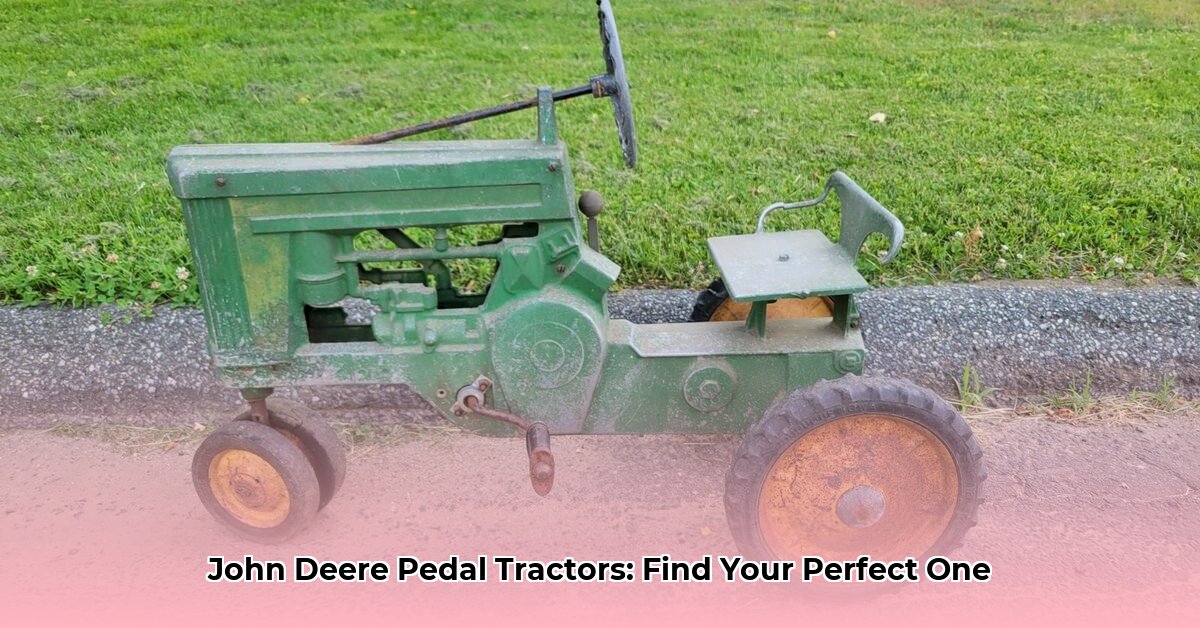
John Deere Pedal Tractor Vintage: Your Hunt for the Perfect Collectible
The hunt for a vintage John Deere pedal tractor is a rewarding blend of nostalgia, smart investing, and owning a piece of agricultural history. But navigating this exciting hobby requires knowledge. Let's explore how to find your perfect tractor. For more information on John Deere toys, check out this helpful resource.
Dreaming of Your Perfect Vintage Deere
Before you begin, define your ideal tractor. Do you prefer a specific model year, color, or feature? Are you seeking a ready-to-display piece or a restoration project? Knowing your preferences streamlines your search.
Consider these popular model categories:
- Early Birds (Pre-1950s): These rare, highly collectible tractors command premium prices due to their age and historical significance. Think of them as the classic cars of the pedal tractor world.
- Mid-Century Marvels (1950s-1970s): Often a sweet spot – collectible yet reasonably priced. Their classic designs remain timeless.
- Later Models (1980s-Present): While not as "vintage," these tractors are desirable, reflecting evolving materials and manufacturing techniques.
Checking the Condition: Your Vintage Tractor Checklist
Condition significantly impacts value. It's about more than just the paint; a holistic assessment is vital. Consider these crucial factors:
- Original Paint: Tractors retaining their original paint are highly prized. Minor imperfections can add character, reflecting the tractor's history. Have you ever seen a truly perfect antique car?
- Rust and Damage: Thoroughly inspect for rust, dents, or broken parts. Significant damage diminishes value.
- Completeness: Are all the original parts present? The original box and instruction manuals dramatically increase value, acting as a sort of vintage warranty!
This table helps assess condition:
| Feature | Excellent Condition | Good Condition | Fair Condition | Poor Condition |
|---|---|---|---|---|
| Paint | Original, minimal wear | Mostly original, minor scratches/chips | Noticeable paint loss, some rust | Extensive rust, major paint damage |
| Mechanics | Fully functional, smooth operation | Functional, minor adjustments needed | Some mechanical issues | Non-functional, major repairs needed |
| Completeness | All original parts, box & manual | Most original parts, minor omissions | Several parts missing | Many parts missing, significant damage |
Finding Your Treasure: Where to Hunt
Online marketplaces like eBay are excellent resources; listings change frequently. Don't overlook local antique shows and auctions – these events often hold hidden gems.
How to Accurately Assess the Value of a Vintage John Deere Pedal Tractor
Key Takeaways:
- Value varies significantly based on model, condition, and authenticity.
- Original cast iron tractors are generally more valuable.
- Certain John Deere and Ertl models are highly sought after.
- Authenticity is crucial; reproductions exist. Careful inspection is needed to differentiate originals from reproductions.
- Market research and expert opinions are invaluable.
Decoding the Value: Factors Influencing Price
Several key factors determine a vintage John Deere pedal tractor’s value. Think of it like appraising a classic car – condition, rarity, and authenticity are paramount.
Model matters. Early cast iron versions are prized for craftsmanship and age. Pressed steel models can also hold value depending on condition and rarity. Specific model numbers and variations significantly impact price.
Condition is critical. A pristine tractor in its original box, with all components intact, commands higher prices than a well-used one (though the "well-loved" aspect can be charming). Look for original paint, decals, and accessories. Does it roll smoothly?
Authenticity is paramount. High-quality reproductions exist. Learn to spot subtle differences in casting techniques, paint application, and overall finish. What are the telltale signs of a reproduction?
Spotting a Fake: Tips for Authentication
Distinguishing authentic tractors from reproductions demands careful study:
- Examine the Casting: Authentic cast iron tractors exhibit unique characteristics. Reproductions often lack the subtle imperfections of originals.
- Analyze the Paint: Original enamel paint shows characteristic aging. Fake paint often lacks texture and depth.
- Check the Decals: Check for proper placement and age-consistent wear.
- Consider the Accessories: Missing or mismatched parts significantly devalue a tractor.
- Seek Expert Opinions: Appraisers specializing in antique toys provide valuable insights.
Researching the Market: Setting Expectations
After confirming authenticity and assessing condition, research the market. Consult online auction sites, collector forums, and price guides. Note recent sales of comparable tractors.
Investing in Your Collection: Preserving Value
Proper care and storage are crucial for maintaining value. Protect your tractor from moisture, extreme temperatures, and damage. Consider display options that protect its condition and showcase its beauty.
Your Step-by-Step Buying Guide
- Research: Identify your dream tractor and desired condition.
- Budget: Determine your spending limit.
- Search: Explore online auction sites and attend local events.
- Inspect: Thoroughly examine the tractor before purchasing.
- Negotiate: Negotiate the price.
- Secure Payment: Use a secure payment method.
- Transport: Arrange safe transport for your new acquisition.
Buying a vintage John Deere pedal tractor is about more than just the financial investment; it's about adding a piece of history to your collection. Happy hunting!